Walk slowly. Notice something. Piece together a place.
About the game
Walk an imagined lake shore with Elin and Mille, a small stone milestone who wakes up when you ask good questions. Visit eight places, solve 24 calm illustrated puzzles across three eras and fill a lake book with what you noticed. The game is in development.
Features
An interactive opening, eight station arrivals, reward pages and an ending with all six story characters.
Elin and Mille stay with you: Mille wakes after your first successful fit, and the station guides join their scenes.
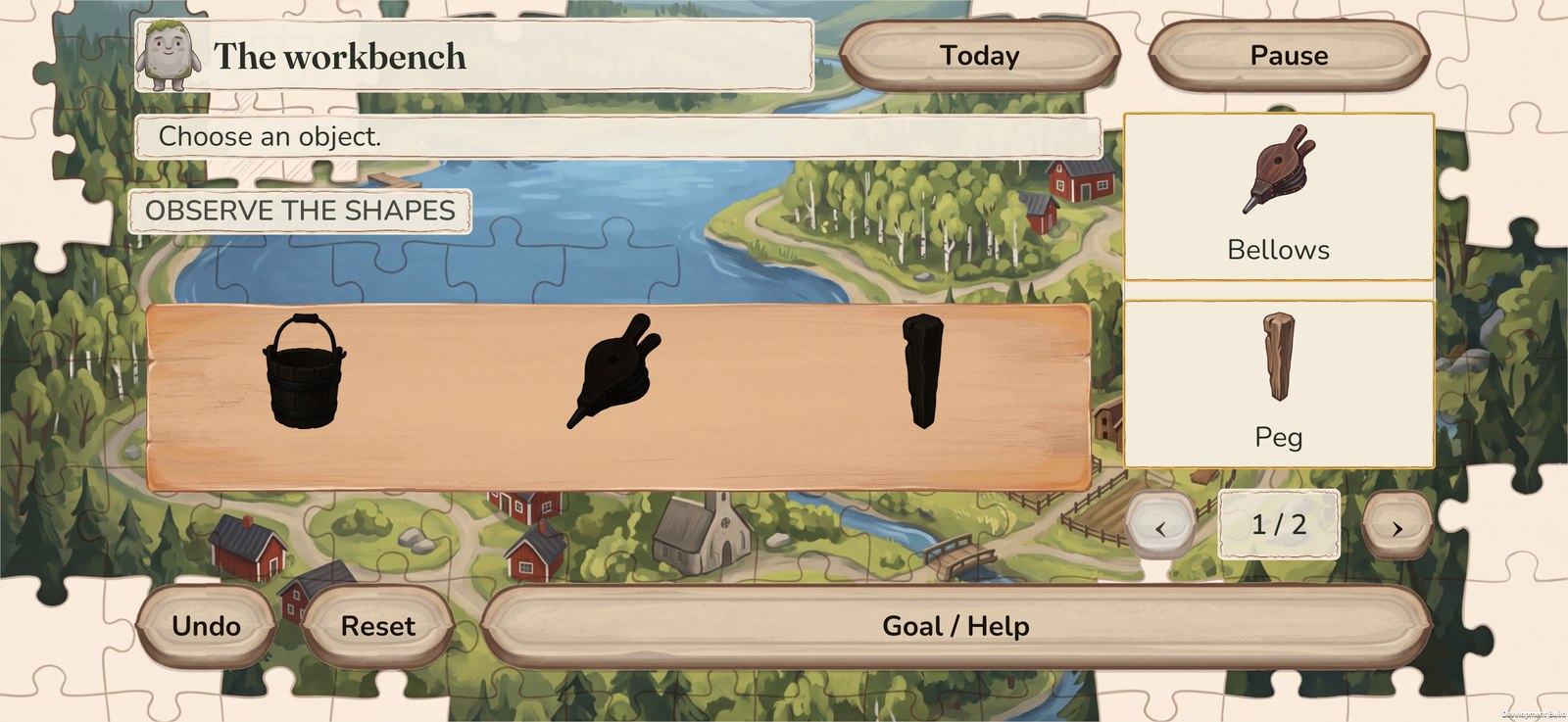
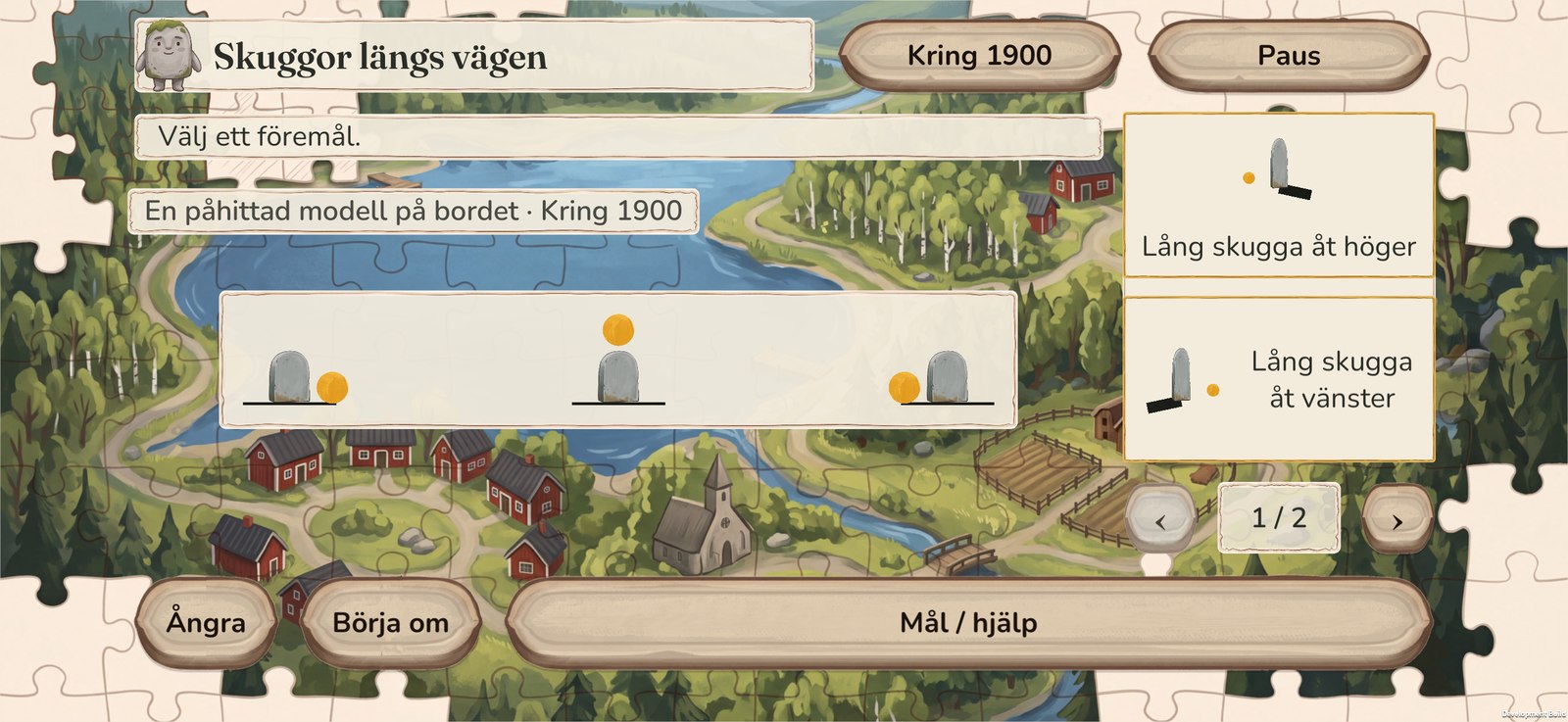
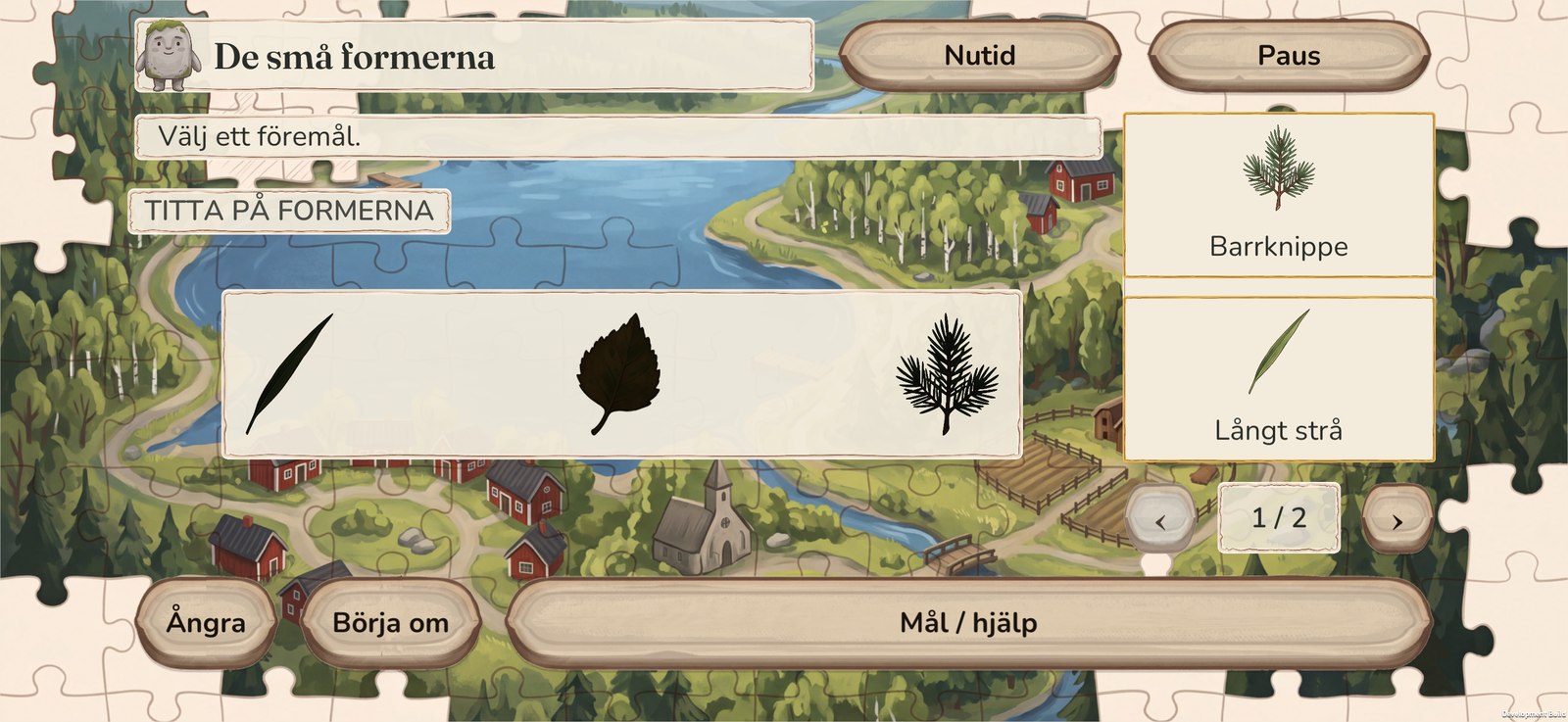
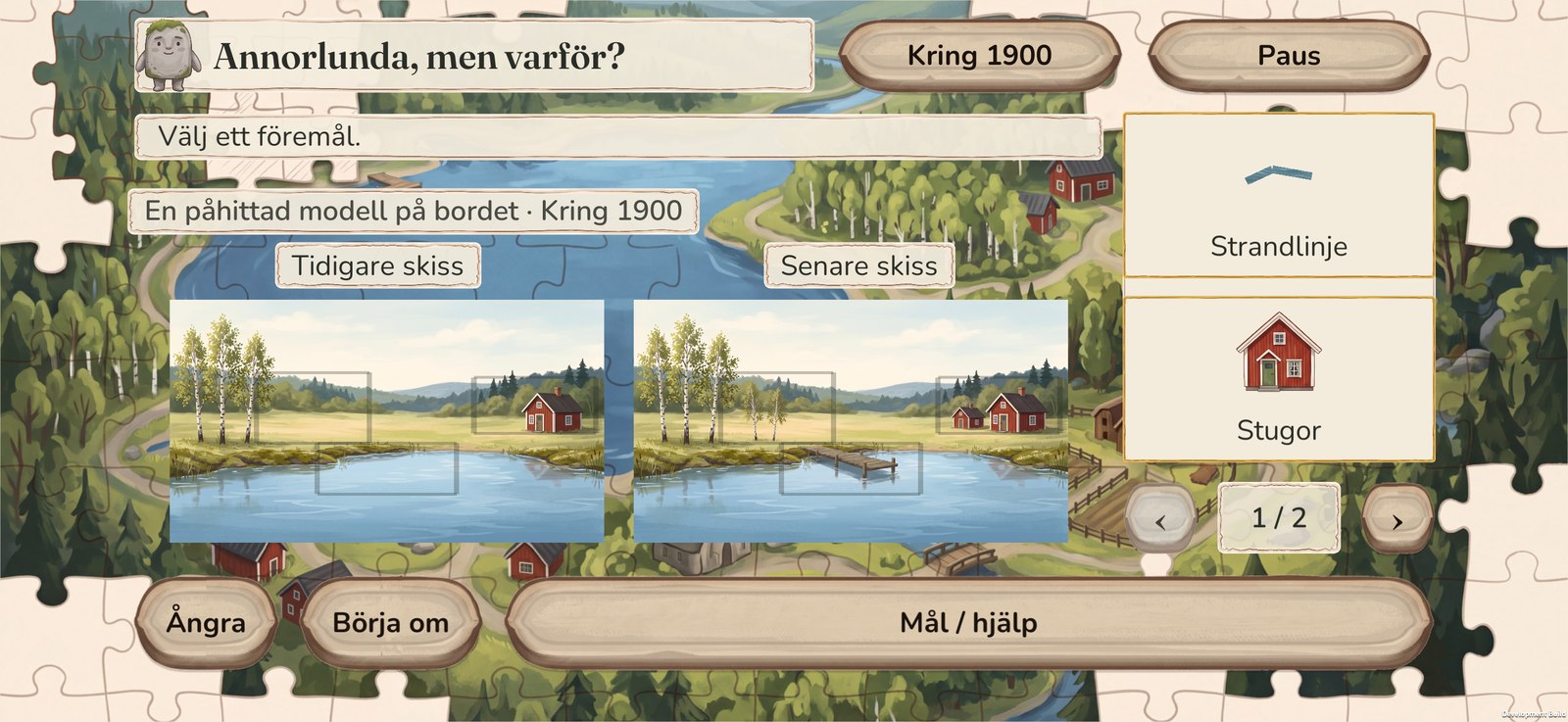
24 illustrated puzzles: fitting painted pieces, spotting what changed, matching shadows and plants, a calm rhythm and small working tabletop models.
Calm painted stages and clear, uncluttered choices in English and Swedish, with larger-text and high-contrast layouts.
Free help when you want it: a gentle clue, a stronger hint, then one next step. Turn, undo, reset or look closer at any time; a wrong move costs nothing.
Use the Era Lens to visit each place today, in the 1500s and in the 1900s, with its own puzzle in each era. Finish all three to add that place's page to your lake book.
Gentle sound cues and optional lake ambience and music, with separate settings; the game is fully playable muted.
English and Swedish, larger text and high contrast. Progress stays on your device, and the last page holds an optional private note or sketch.
Concept art
Concept art explores the intended look; it is separate from captured gameplay.
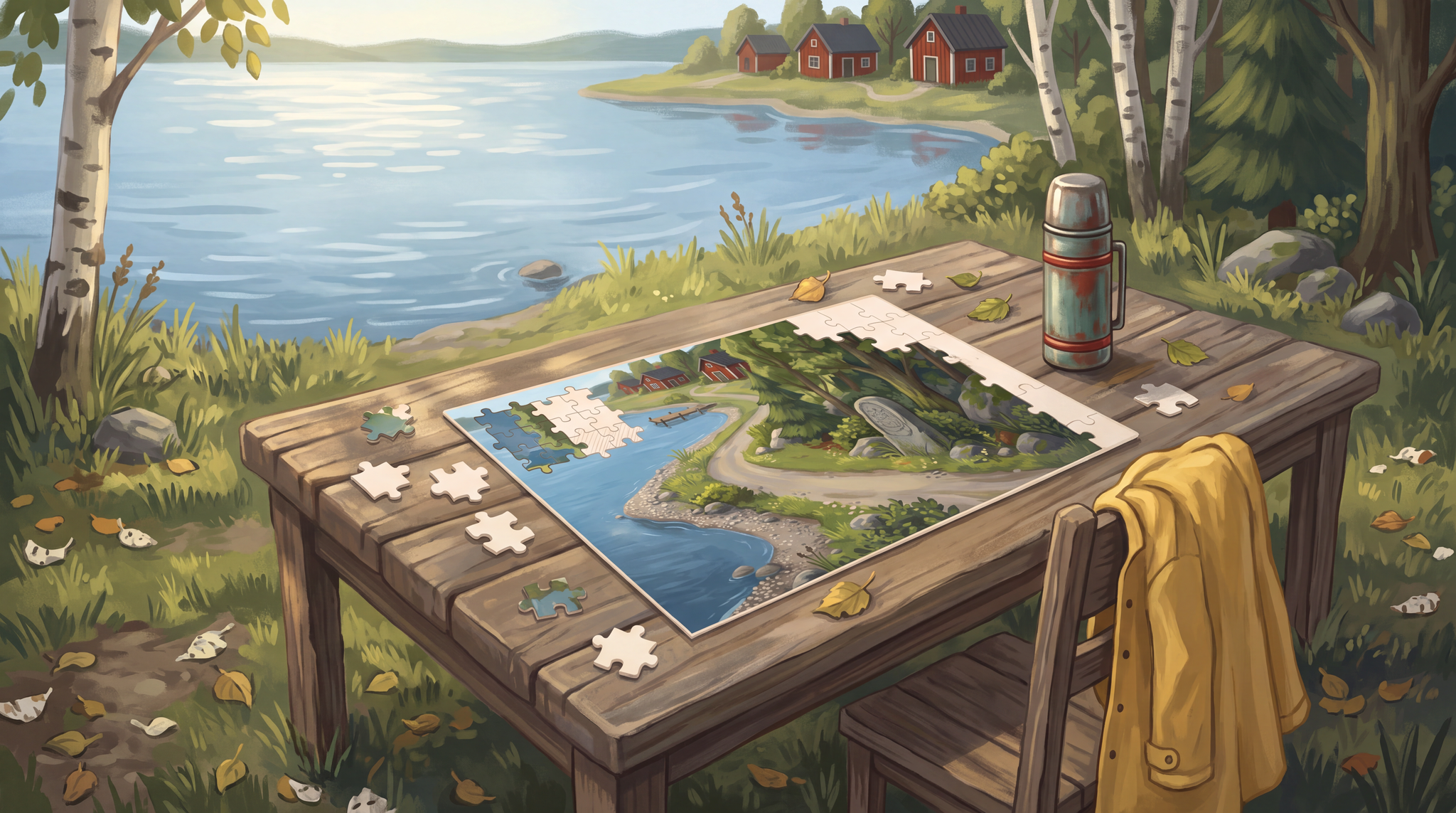
Concept artThe lake table where the journey starts. Artwork, not a gameplay screenshot.
Gameplay screenshots
Screenshots are captured from the current version of the game.
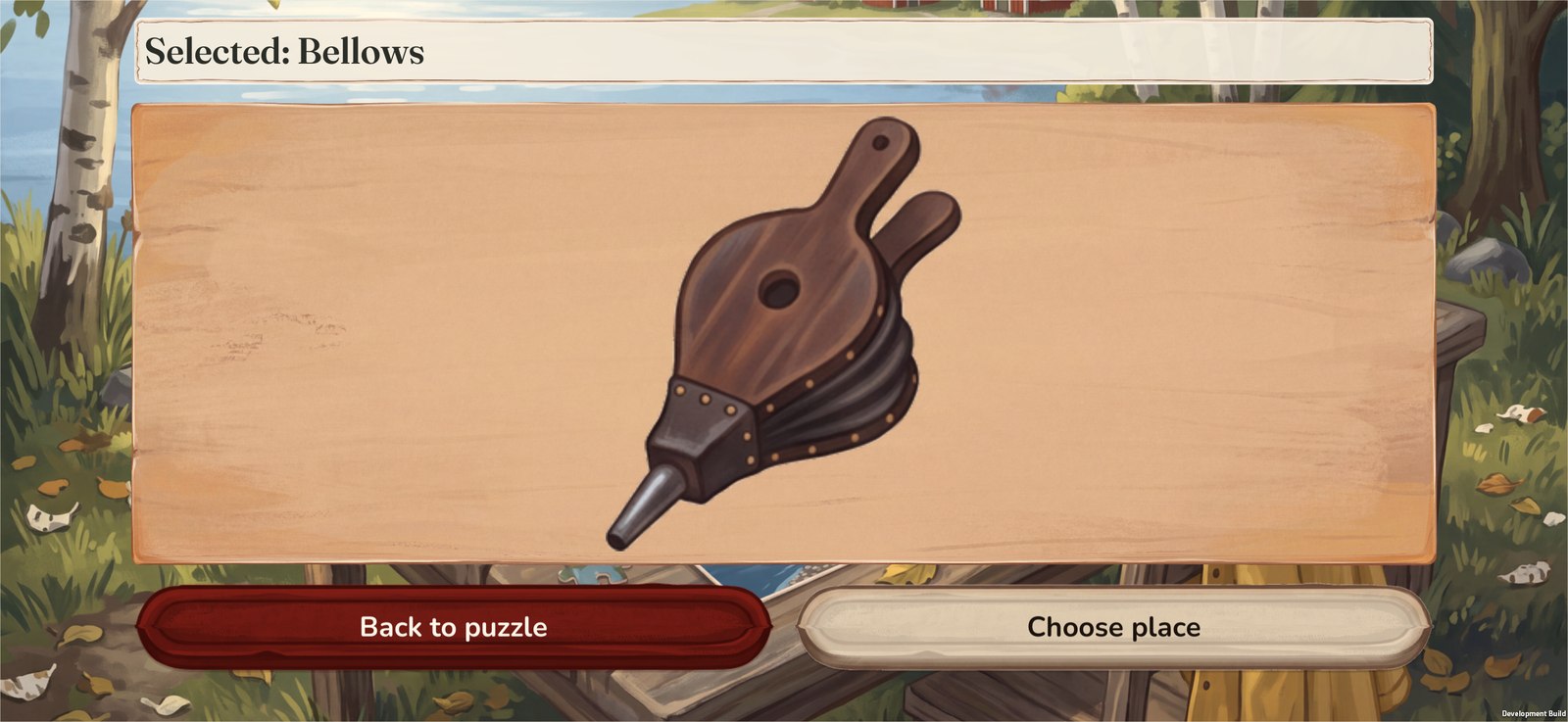
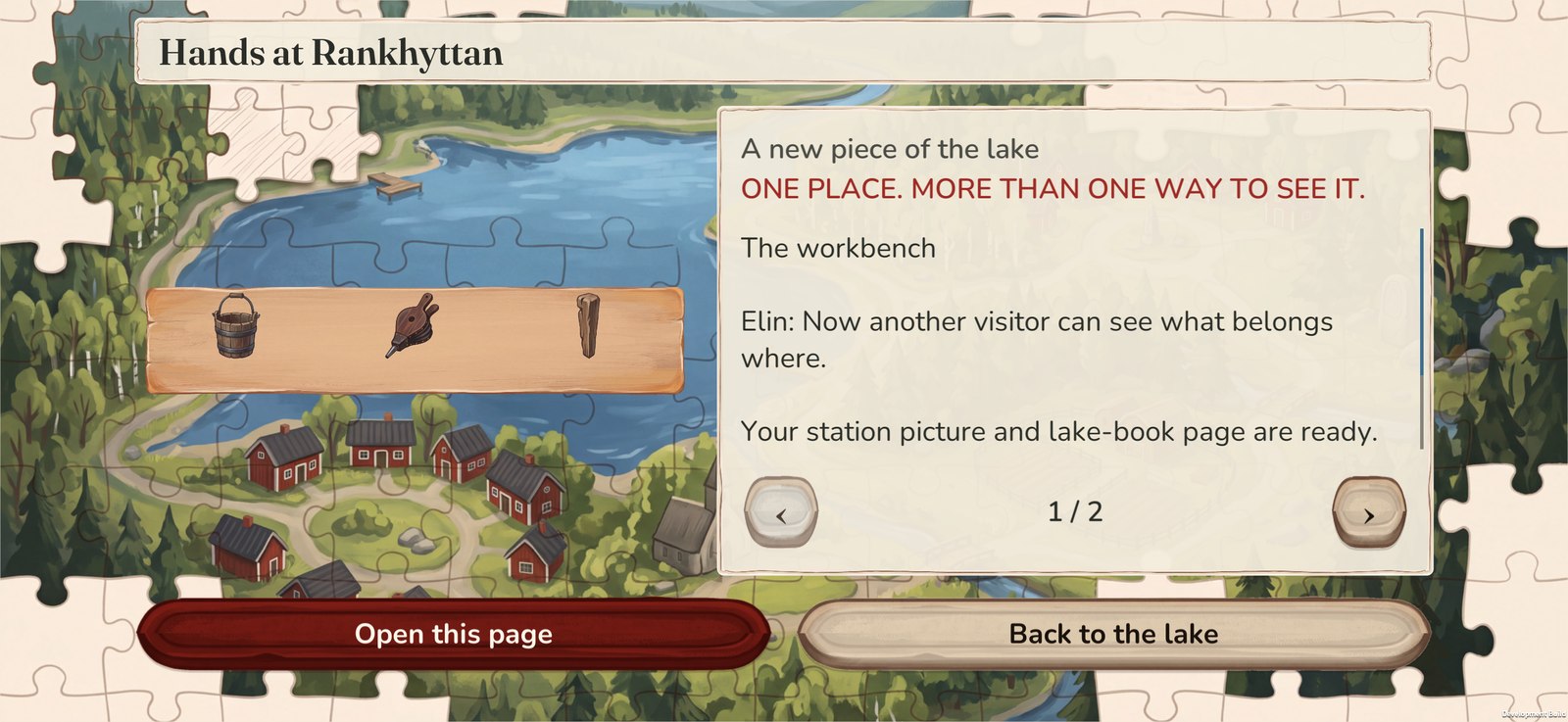
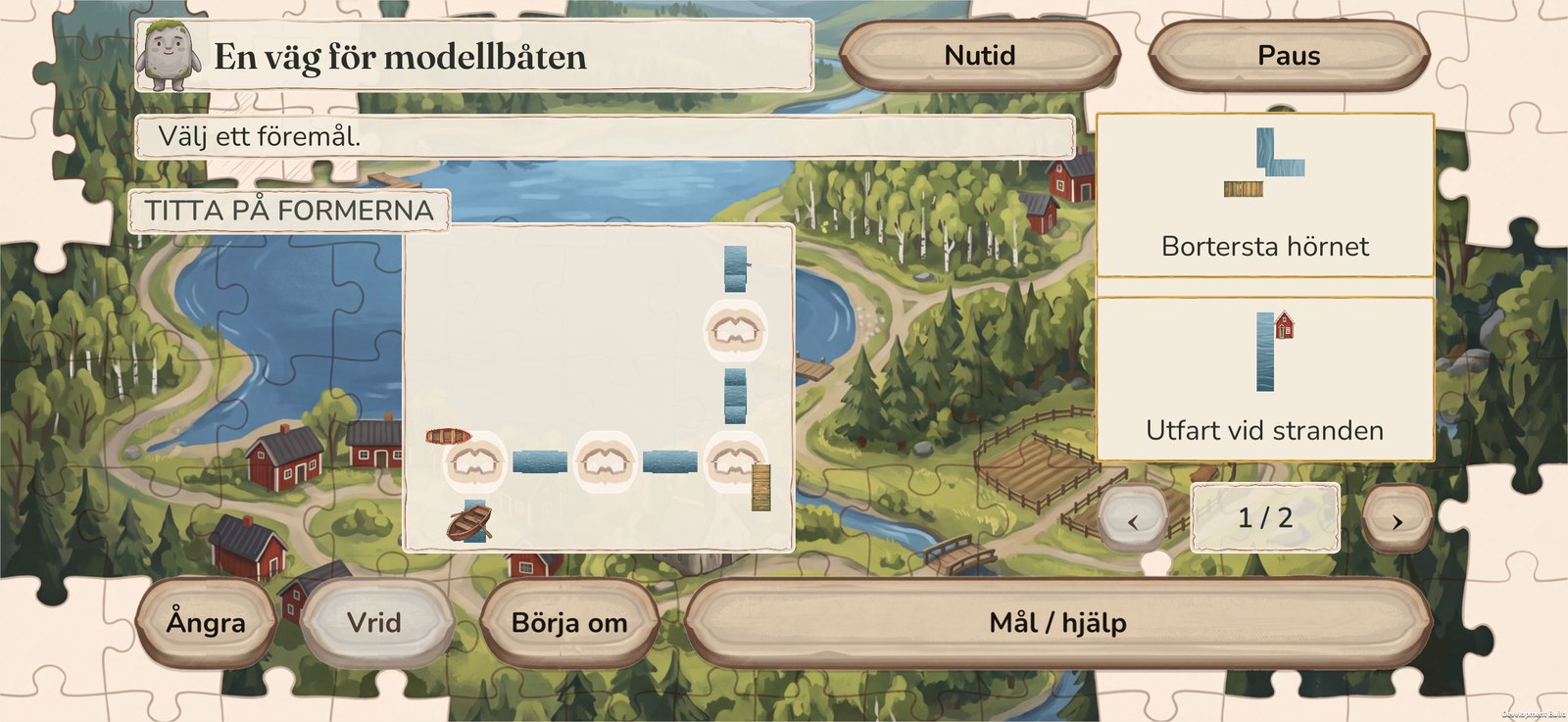
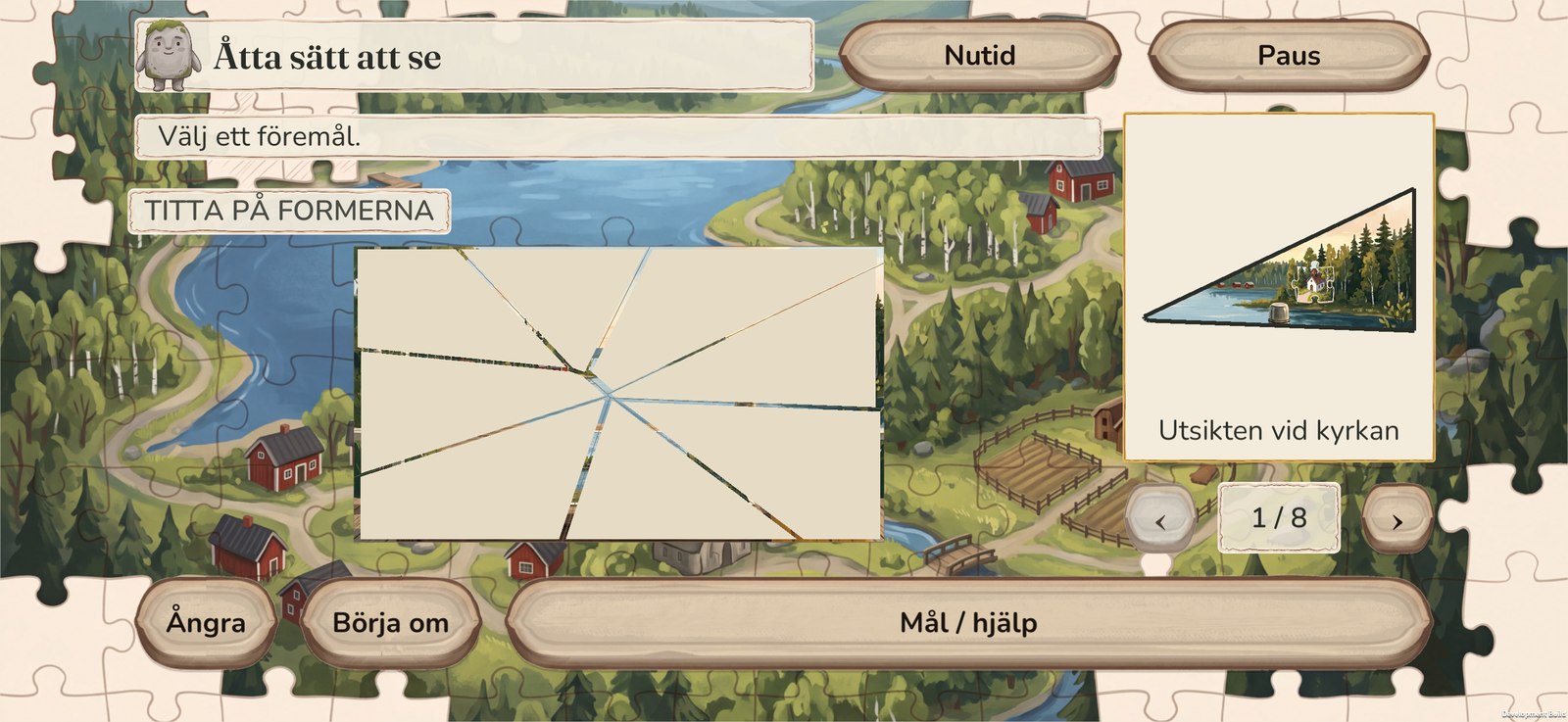
Gameplay screenshotHome beside the lake.Version 1.0.0 · iOSGameplay screenshotThe Rankhyttan workbench: match each tool to its outline.Version 1.0.0 · iOSGameplay screenshotLook closer: every tool can be inspected full size.Version 1.0.0 · iOSGameplay screenshotThe finished workbench on the station's reward page.Version 1.0.0 · iOSGameplay screenshotMatching shadows, played in Swedish.Version 1.0.0 · iOSGameplay screenshotComparing painted plants, played in Swedish.Version 1.0.0 · iOSGameplay screenshotThe channel model: route the boat between the marked jetties, played in Swedish.Version 1.0.0 · iOSGameplay screenshotSpot what changed between two paintings, played in Swedish.Version 1.0.0 · iOSGameplay screenshotPutting the lake back together, played in Swedish.Version 1.0.0 · iOS
Story
Elin and the small living milestone Mille collect eight ways of seeing one place. The lake fits on the table again; the final notebook page waits for the next visitor.
Manuscript
The shore-path table
Signe: Take this little lake with you. Bring back something a quick walk would miss. Turn the Era Lens, and the map shows how the shore might have looked long ago.
Elin: It is mostly blank.
We began with a blank lake and three edges that did not seem to agree. Turning a piece changed its neighbours too. Mille says that is how a good question works. I drew the table, the shore and a little place where the next drawing can go.
The Strand milestone
Mille: A relative! Taller, quieter, very good at standing still.
Elin: What do the marks say?
Mille: Let us look before I invent a cousin.
A road marker made us stop. Some lines were clear and some were not. We could arrange a model without pretending to read every old mark. My page has two pictures: what I saw, and what I imagined. I have kept a small space between them.
Hands at Rankhyttan
Elin: I can hear the workbench in my head.
Mille: My memory adds drums to everything.
Elin: Then we will start with the hands.
This page is about hands: carrying, making, repairing and pointing something out to a visitor. The farmhand in our little puzzle is a made-up person. The work asks a real question, though: whose effort do we forget when we only remember a place name?
The church viewpoint
Bea: A page may hold a story, a picture or a fact. It helps to say which.
Mille: Can it hold a very small stone?
Bea: If the binding is strong.
From the viewpoint we saw a familiar shape in a new way. Bea helped us keep the labels honest. One drawing is an observation. One scene is a story we invented. A source note needs someone to check it. A book can be warm and careful at the same time.
The bathing jetty
Sam: People remember the water. I remember the loose board everybody stepped around.
Elin: Did you fix it?
Sam: Eventually. Good stories need small repairs.
The jetty page has a repair, a boat and a summer picture. None is the whole story. Sam says a place stays welcoming because somebody notices a little job. I drew a plain board beside the view, so the small work would not disappear behind the pretty water.
The channel model
Jo: This model is ours to try. The real channel is not a puzzle toy.
Mille: A very important difference.
Elin: We will keep our experiments on the table.
Our boat was small enough to pick up with one hand. Its route made us think about the people and things that move between places. I marked the model clearly in the book. We learned from playing with it; we did not learn how to operate a real channel.
The birch-and-reed pause
Mille: We have only one piece left after this. We should hurry slowly.
Elin: I think that means stop.
Mille: You are becoming fluent in milestone.
We stopped for the small things: a blade, a leaf, a line in a sketch. Noticing a difference is not the same as knowing its cause. Mille was quiet for a while. When he spoke, he said, What else might we look at? I liked that question.
The table with room left
Signe: Welcome back. Did the lake get bigger?
Elin: Only in my book.
Mille: And in my questions.
The lake fits on the table again, but it does not feel small. Our book holds observations, imagined scenes and questions to check. The last page is blank. If someone comes after us, I hope they will add something we walked past.
Art direction
Hand-painted gouache lake, Falu red, cream paper, moss green and calm blue; this game keeps its own storybook identity.
Notices
Places, past scenes, routes and tabletop models are imagined interpretations, not historical records.
Some illustrations and music were made with the help of AI tools.
Typefaces: Fraunces and Nunito under the SIL Open Font License 1.1.